Airbus a350 - wiki
Airbus fan
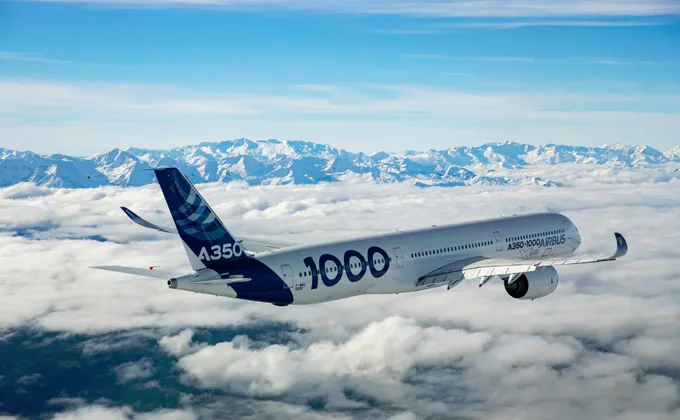
Airbus A350 XWB: A Next-Generation Widebody Aircraft
Introduction
The Airbus A350 XWB (Extra Wide Body) is a state-of-the-art long-range aircraft designed to compete with the Boeing 787 and 777. Launched as part of Airbus’ response to increasing fuel efficiency demands and passenger comfort expectations, the A350 incorporates advanced aerodynamics, cutting-edge materials, and the latest in cockpit technology.
Development and History
Airbus announced the A350 program in 2004 to compete with Boeing’s 787 Dreamliner. Initially planned as an improved version of the A330, the aircraft was later redesigned as a completely new model featuring an advanced composite fuselage, larger windows, and an optimized wing structure.
The first prototype of the A350 took flight on June 14, 2013, from Toulouse, France, marking the beginning of an extensive flight testing program. The first commercial flight was operated by Qatar Airways on January 15, 2015, flying from Doha to Frankfurt.
Technical Specifications
| Specification | Airbus A350-900 | Airbus A350-1000 |
|---|---|---|
| Length | 66.8 m (219 ft) | 73.79 m (242 ft) |
| Wingspan | 64.75 m (212 ft) | 64.75 m (212 ft) |
| Height | 17.05 m (56 ft) | 17.08 m (56 ft) |
| Max Takeoff Weight | 280,000 kg | 316,000 kg |
| Range | 15,372 km (8,300 nm) | 16,112 km (8,700 nm) |
| Engines | Rolls-Royce Trent XWB-84 | Rolls-Royce Trent XWB-97 |
| Max Passengers | ~325 (Typical 3-class) | ~350 (Typical 3-class) |
Design and Features
1. Airframe and Materials
The A350 is built with 53% composite materials, significantly reducing its weight while improving fuel efficiency. The aircraft’s fuselage is constructed primarily from carbon-fiber-reinforced polymer (CFRP), which offers better resistance to corrosion and fatigue compared to traditional aluminum structures.
2. Aerodynamics and Efficiency
The A350 features a curved wing design optimized for aerodynamics. Made from carbon fiber, these wings flex during flight, reducing drag and improving overall efficiency. The incorporation of Sharklets (wingtip devices) further enhances fuel savings.
3. Engines and Performance
The aircraft is powered by Rolls-Royce Trent XWB engines, designed specifically for the A350. These engines provide a 25% fuel efficiency improvement compared to older widebody aircraft. Additionally, they contribute to reduced carbon emissions and lower operational costs for airlines.
4. Cockpit and Avionics
The A350’s cockpit is equipped with six large LCD screens, an enhanced HUD (Head-Up Display), and a fly-by-wire control system similar to other Airbus models. The Side-Stick Controller ensures pilots experience consistency across different Airbus aircraft types.
5. Cabin and Passenger Comfort
The A350 XWB’s cabin is designed with passenger comfort in mind. Notable features include:
- Extra-wide fuselage: Providing more space per passenger.
- Larger windows: 20% bigger than those on the Boeing 787.
- Advanced air filtration: Refreshing cabin air every two minutes.
- Quiet cabin: 50% quieter than previous-generation aircraft.
- Mood lighting system: Utilizing LED lights to minimize jet lag.
Variants
The A350 XWB family consists of multiple variants:
- A350-900: The base model, with a capacity of 325 passengers and a range of 8,300 nautical miles.
- A350-1000: A stretched version with increased seating for 350 passengers and an extended range.
- A350F (Freighter): An upcoming cargo variant set to compete with Boeing’s 777F.
Airlines Operating the A350
Many leading airlines operate the A350 XWB due to its fuel efficiency and long-range capabilities. Some notable operators include:
- Qatar Airways (Launch customer)
- Singapore Airlines
- Cathay Pacific
- Lufthansa
- British Airways
- Delta Air Lines
- Air France
Environmental Impact
The A350 is one of the most eco-friendly commercial aircraft in the world. It reduces CO₂ emissions by 25% compared to older aircraft, thanks to its efficient engines and lightweight construction. The use of composite materials also extends the aircraft’s lifespan and reduces the need for frequent maintenance.
Future of the A350
Airbus continues to develop new capabilities for the A350, including ultra-long-range (ULR) versions for flights exceeding 20 hours, like the Singapore Airlines Singapore–New York route. The A350 also serves as the foundation for future hydrogen-powered aircraft concepts, supporting Airbus’ sustainability goals.
Conclusion
The Airbus A350 XWB represents a major leap forward in aviation technology, passenger comfort, and fuel efficiency. Its innovative design, advanced materials, and powerful engines make it a preferred choice for airlines operating long-haul international routes. As Airbus continues to refine and expand the A350 program, it remains a symbol of modern aviation excellence.
Related Articles
- Airbus A380: The Superjumbo of the Skies
- Boeing 787 vs. Airbus A350: A Detailed Comparison
- How Airbus Fly-By-Wire Technology Works